

Luliconazole cream 1% is a topical antifungal medicine used to treat certain fungal infections of the skin. It belongs to a group of medicines called azole antifungals.
It is commonly used for fungal infections such as athlete's foot (tinea pedis), jock itch (tinea cruris), and ringworm (tinea corporis).
Luliconazole works by interfering with the production of ergosterol, an important component of the fungal cell membrane. This damages the fungal cell and helps control the infection.
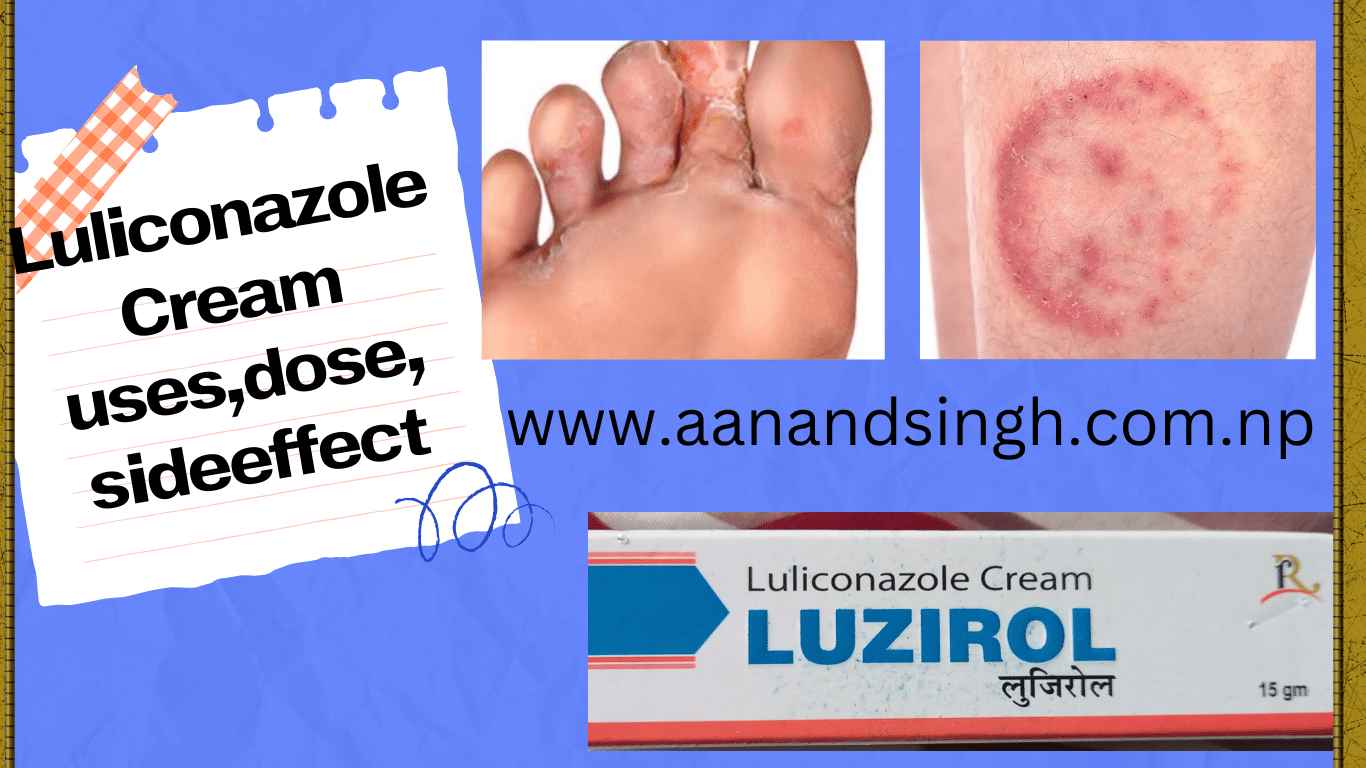
1. What Is Luliconazole Cream?
Luliconazole cream 1% is an antifungal medicine applied directly to the affected skin.
It is mainly prescribed for dermatophyte fungal infections, including:
- Athlete's foot
- Jock itch
- Ringworm
The medicine is intended for external use on the skin. It should not be swallowed or applied inside the eyes, mouth, or vagina.
2. Brand Names of Luliconazole Cream
Different pharmaceutical companies may sell luliconazole under different brand names. The brand name and availability can vary according to the country and manufacturer.
Some brand names associated with luliconazole include:
- Lulifin Cream
- Luzu Cream
- Lulibet Cream
- Luliford Cream
- Lulimac Cream
- Lulinaz Cream
- Lyriful Cream
- Azolul Cream
- Luzirol Cream
- Lucikin Cream
- Lulzi Cream
- Lulizip Cream
- Luvius Cream
- Lilycona Cream
- Luzilol Cream
- Lulitec Cream
- Lunaz Cream
- Lortimac Cream
- Lulidox Cream
- Lufungal Cream
- Lucozu Cream
- Lucretius Cream
- Lulion Cream
- Lulifresh Cream
- Fungerase-L Cream
- Luliz Cream
The availability of these brands may differ from one location to another. Always check the generic name and strength on the package rather than relying only on the brand name.
3. Uses of Luliconazole Cream
Luliconazole is used to treat certain fungal infections of the skin.
A. Athlete's Foot (Tinea Pedis)
Athlete's foot is a fungal infection that commonly affects the skin between the toes.
It may cause:
- Itching
- Redness
- Burning
- Cracked skin
- Scaling or peeling
- Discomfort between the toes
Luliconazole can be prescribed for interdigital tinea pedis caused by susceptible dermatophyte fungi.
B. Jock Itch (Tinea Cruris)
Jock itch is a fungal infection that usually affects the groin and nearby skin.
It can cause:
- Red or darker patches
- Itching
- Burning
- Scaling
- A spreading rash
Luliconazole cream can be used to treat tinea cruris when prescribed appropriately.
C. Ringworm (Tinea Corporis)
Ringworm is a fungal infection of the skin. Despite its name, it is not caused by a worm.
It often appears as a circular or ring-shaped rash with:
- Redness
- Itching
- Scaling
- A more noticeable border
Luliconazole is one of the topical antifungal medicines used for certain cases of tinea corporis.
4. How Does Luliconazole Work?
Luliconazole works by interfering with the production of ergosterol.
Ergosterol is an important component of the fungal cell membrane. When its production is disrupted, the structure and function of the fungal cell are affected.
In simple terms:
Luliconazole → interferes with ergosterol production → damages fungal cell membrane → helps eliminate susceptible fungi.
5. How to Apply Luliconazole Cream
Before applying the cream, clean and dry the affected area.
Follow these steps:
- Wash your hands.
- Clean the affected skin gently.
- Dry the area completely.
- Apply a thin layer of luliconazole cream to the affected skin.
- Apply it to the immediate surrounding area as instructed.
- Wash your hands after applying the cream, unless your hands are the area being treated.
The cream should be applied exactly as directed by your doctor or the product instructions.
There is no general requirement to avoid normal sunlight after applying luliconazole. However, protect irritated or infected skin from excessive sun exposure and follow your doctor's advice.
6. Luliconazole Cream Dosage
One important point is that luliconazole cream is generally not applied two or three times every day.
For the commonly approved 1% formulation, the recommended schedule is once daily for the indicated infections.
Tinea Pedis (Athlete's Foot)
For interdigital athlete's foot:
Apply a thin layer once daily for 2 weeks.
Apply the cream to the affected area and approximately 1 inch of the surrounding skin.
Tinea Cruris (Jock Itch)
For jock itch:
Apply a thin layer once daily for 1 week.
Apply it to the affected skin and approximately 1 inch of the surrounding area.
Tinea Corporis (Ringworm)
For ringworm:
Apply a thin layer once daily for 1 week, according to the approved product instructions.
The appropriate age range can vary according to the product and country. Current U.S. labeling supports certain pediatric uses, including patients 12 years and older for tinea pedis and tinea cruris and patients 2 years and older for tinea corporis.
Do not use an adult dosing schedule for a young child unless a healthcare professional has recommended it.
7. Side Effects of Luliconazole Cream
Luliconazole is generally well tolerated, but some people may experience irritation at the application site.
Possible side effects include:
- Mild burning
- Stinging
- Redness
- Itching
- Skin irritation
- Dryness or discomfort at the application site
Most reported reactions are mild.
The original article listed diarrhea, nausea, muscle pain, and decreased heart rate as common side effects. These should not be presented as typical side effects of topical luliconazole because the medicine is applied to the skin and systemic exposure is low.
Serious Allergic Reaction
A serious allergic reaction is uncommon, but seek immediate medical attention if you develop:
- Swelling of the face, lips, tongue, or throat
- Difficulty breathing
- Severe dizziness
- Severe skin reaction
Stop using the medicine and contact a healthcare professional if significant irritation or an unusual reaction develops.
8. Storage of Luliconazole Cream
Store luliconazole cream at room temperature, generally between 20°C and 25°C.
Keep the tube tightly closed and away from excessive heat.
Keep all medicines out of the reach of children.
9. Important Advice for Patients
If you are using luliconazole for athlete's foot or another fungal infection, good hygiene can help reduce the chance of the infection returning.
Consider the following tips:
- Keep the affected skin clean and dry.
- Dry carefully between the toes after bathing.
- Change socks regularly.
- Avoid sharing towels, socks, shoes, or clothing.
- Wash towels and clothing regularly.
- Avoid wearing damp footwear for long periods.
- Allow shoes to dry properly.
- Avoid scratching the infected area.
- Wash your hands before and after applying the cream.
Do not cover the treated area with an airtight or occlusive dressing unless your doctor specifically tells you to do so.
If the infection does not improve after completing the recommended treatment, consult a healthcare professional. The rash may have another cause or may require a different treatment.
10. Avoid Contact With Eyes and Mouth
Luliconazole cream is intended for external skin use.
Do not apply it to:
- Eyes
- Mouth
- Inside the nose
- Vagina
- Other internal body areas
If the cream accidentally gets into your eyes, rinse thoroughly with water.
Wash your hands after application unless you are treating your hands.
11. Can Luliconazole Be Used During Pregnancy?
There is limited information about the use of luliconazole cream during pregnancy.
If you are pregnant, planning pregnancy, or think you may be pregnant, speak with your doctor before using luliconazole.
The older classification of luliconazole as simply "Category C" should not be used as current advice because the FDA no longer uses the old pregnancy letter-category system for prescription drug labeling.
12. Is Luliconazole Safe During Breastfeeding?
There is not enough information to determine whether luliconazole passes into human breast milk.
However, topical luliconazole has low systemic absorption.
If you are breastfeeding, discuss the treatment with your doctor or pharmacist.
Avoid applying the cream directly to the breast or nipple unless specifically advised. If treatment of the breast is necessary, ask your healthcare professional about safe application and feeding practices.
13. Is Luliconazole Fungicidal or Fungistatic?
Luliconazole has fungicidal activity against susceptible dermatophytes.
Its antifungal action involves inhibition of ergosterol synthesis, which damages the fungal cell membrane. Therefore, it is more accurate to describe luliconazole as having fungicidal activity rather than simply saying that it only slows fungal growth.
14. Can Luliconazole Be Used on Private Parts?
Luliconazole can be prescribed for tinea cruris, commonly called jock itch, affecting the external groin area.
However, this does not mean that the cream should be applied inside the vagina or to other internal areas.
The medicine is for external skin use only and is not intended for ophthalmic, oral, or intravaginal use.
If you have itching, discharge, sores, or irritation involving the genitals, do not assume that it is a fungal infection. A doctor may need to determine the actual cause.
15. Luliconazole vs Sertaconazole
Both luliconazole and sertaconazole are topical antifungal medicines, but one should not automatically be considered better for every patient.
The best antifungal depends on:
- Type of fungal infection
- Severity
- Location
- Previous treatment
- Cost and availability
- Individual response
- Doctor's recommendation
Therefore, patients should not choose between these medicines solely based on a general claim that one is more effective.
Amlodipine Tablet: Uses and Important Information
https://www.aanandsingh.com.np/2023/12/amlodipine-tablet-uses.html
16. Luliconazole vs Ketoconazole
Luliconazole and ketoconazole are both topical azole antifungals, but their approved uses, treatment schedules, and evidence may differ.
The appropriate medicine depends on the type of fungal infection.
Do not switch from one antifungal to another simply because one cream appears to work faster. If the diagnosis is uncertain or the infection does not improve, consult a healthcare professional.
Frequently Asked Questions About Luliconazole Cream
Is luliconazole a steroid?
No. Luliconazole is an antifungal medicine, not a corticosteroid.
Is luliconazole used for ringworm?
Yes. Luliconazole 1% cream is used for certain cases of tinea corporis, commonly called ringworm.
Is luliconazole used for athlete's foot?
Yes. It is used for certain cases of interdigital athlete's foot. The usual labeled treatment is once daily for two weeks.
How many times a day should luliconazole be applied?
For the commonly approved 1% cream, it is generally applied once daily, not two or three times daily. The duration depends on the type of fungal infection.
Can I use luliconazole for itching?
Luliconazole may reduce symptoms when the itching is caused by a susceptible fungal infection. However, not every itchy rash is fungal. If the diagnosis is incorrect, an antifungal cream may not help.
Can luliconazole be used on the face?
Do not apply it to the face unless a healthcare professional specifically recommends it for your condition. Facial rashes can have many different causes and may require a different treatment.
Can I use luliconazole inside the vagina?
No. Luliconazole cream is intended for external skin use and is not for intravaginal use.
Can children use luliconazole cream?
Certain pediatric uses are supported by current labeling, but the approved age depends on the infection. Current U.S. labeling supports use in patients 12 years and older for certain tinea pedis and tinea cruris cases and in patients 2 years and older for tinea corporis.
For younger children, use it only when specifically prescribed.
What if the fungal infection does not improve?
If the infection does not improve after completing the recommended treatment, consult a doctor. The condition may not be fungal, or a different treatment may be necessary.
Final Thoughts
Luliconazole cream 1% is a topical azole antifungal used to treat certain fungal infections of the skin, including athlete's foot, jock itch, and ringworm.
It works by interfering with ergosterol production in fungal cells, helping to damage and eliminate susceptible fungi.
One important point is that luliconazole should generally be applied once daily, rather than two or three times daily. For the commonly approved 1% formulation, interdigital athlete's foot is treated for two weeks, while tinea cruris and tinea corporis are generally treated for one week.
The medicine is generally well tolerated, with application-site irritation being the most commonly reported type of adverse reaction. It should be used only on the skin and should not be placed in the eyes, mouth, or vagina.
If a rash does not improve with antifungal treatment, it is important to get the diagnosis checked rather than continuing the cream indefinitely.
References
-
FDA – LUZU (Luliconazole) Cream 1% Prescribing Information
https://www.accessdata.fda.gov/drugsatfda_docs/label/2017/204153s002lbl.pdf -
DailyMed – Luliconazole Cream 1%
https://dailymed.nlm.nih.gov/dailymed/drugInfo.cfm?setid=7ccda3ba-9c98-468d-83c6-7f0cc7c88c33
